Dishwasher loading: a practical guide for everyday dishes
The last bowl fits, the door closes, and the dishwasher starts. Later, a few pieces still need attention. Before changing detergent or assuming the appliance needs a repair, look at how that load was arranged. A useful routine starts at the kitchen counter: decide what belongs in the machine, make room for it, and check the loaded racks before pressing start.
Check dish suitability, arrange the load with space, and review spray-arm clearance before starting.
Sort the load before opening the racks
Keep your model's loading diagram handy, either in the manual or as a saved page on your phone. Racks, baskets and adjustable sections differ, so a photograph of someone else's dishwasher is not a complete guide to yours. Check the dishware maker's care instructions as well as the appliance manual, especially for unfamiliar containers or decorative pieces.
Put anything with unclear dishwasher suitability aside while you confirm it. Start with the ordinary plates and cups you know are suitable, then consider larger pieces. If the household shares the job, agree where uncertain items go on the counter. That avoids a guessing game when one person loads a dish that somebody else normally washes separately.
Clear food scraps without adding an extra washing job
Scrape off food remnants before loading. Bosch's dishwashing guidance says a preliminary rinse is not needed and recommends removing the food instead. Follow your own model's instructions; there is no reason to invent a universal soaking or scrubbing routine for every load.
For a family meal, set a simple order at the counter: clear leftovers, set aside unsuitable pieces, then load the suitable ones. Let one person finish arranging a rack before another adds the final bowls. It is easier to spot an awkward item at this stage than to remember later who squeezed it into the last gap.
Give each piece a place, not just a gap
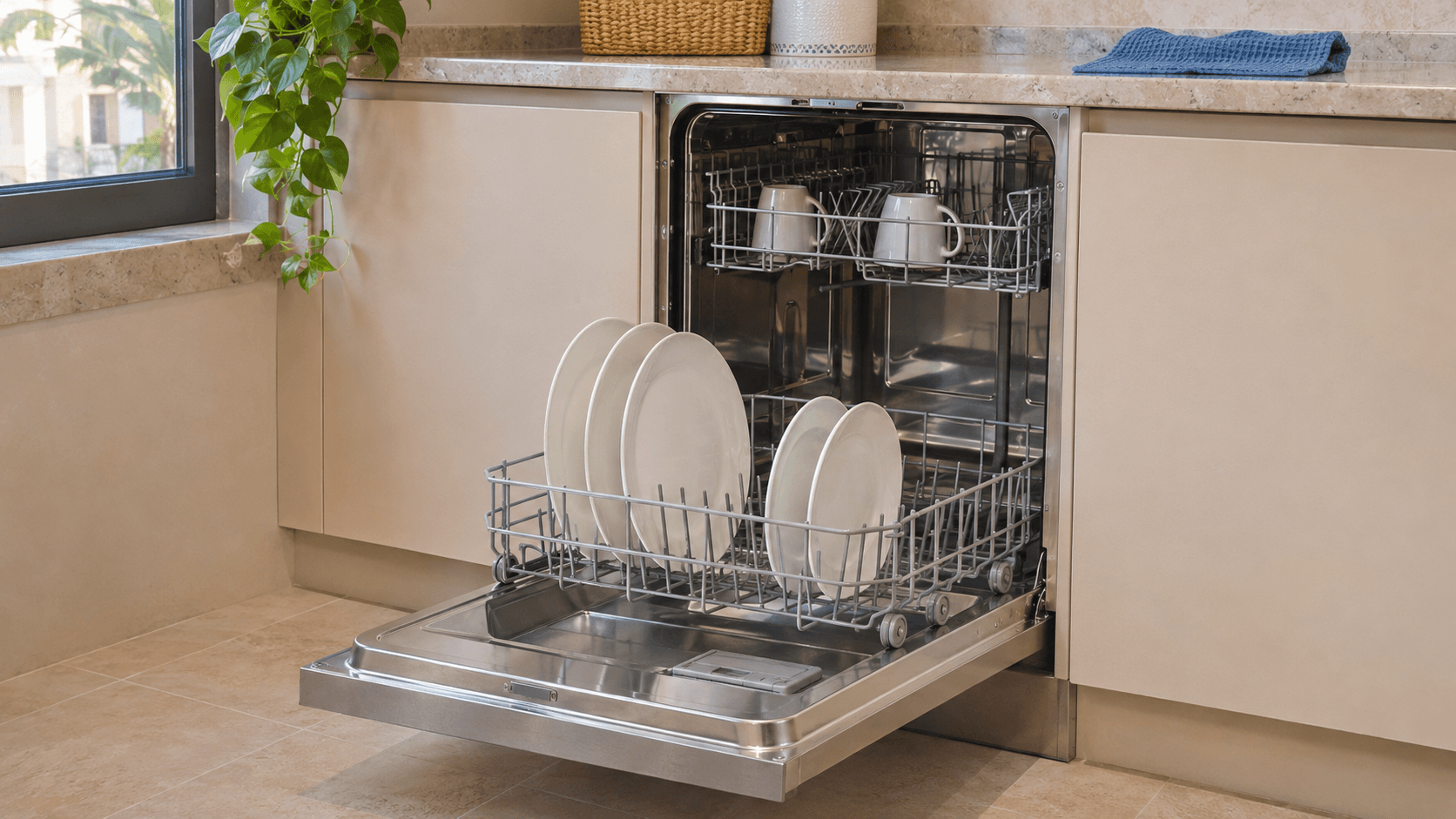
Samsung Gulf's loading guide places larger cookware below and smaller cups and glasses above. It recommends dirty faces towards the centre, open vessels facing down, and space between items. Follow the model's restrictions for plastics and the dedicated supports or utensil compartments it provides.
Look at the whole load before committing to a layout. A large serving bowl and several small bowls may call for a different arrangement from dinner plates alone. Example: if the final serving dish has no suitable place in the loading diagram, leave it for another load or wash it separately according to its care instructions. A closed door is not proof that everything fits properly.
Take a final look for blocked movement
Tall items can obstruct the spray arms; Bosch specifically includes this in its troubleshooting checks. Before starting, follow the manual's clearance check and reposition anything that interferes. Do not force a rack or door shut, bend parts to make space, or reach into a running appliance.
Make this the responsibility of whoever starts the cycle, even if someone else loaded most of it. Check again after adding a last-minute ladle or pan. If a rack adjustment is needed, use the instructions for your model rather than guessing how a clip releases. Stop if the mechanism is unclear or damaged.
Match the settings to the actual load
Samsung's general loading recommendations also call for cycle and soil settings that match the dishes, with the manufacturer's recommended detergent and rinse-aid amounts. Use your own manual and product directions instead of treating every load alike or adding more product whenever something comes out poorly.
Save the programme name with a photograph of a load you want to improve. If you change the layout next time, note that change. Altering the programme, product and arrangement together makes it harder to explain what helped. A short note is enough; you do not need a detailed log of every wash or a claim that one setting suits all households.
If the problem returns, describe the result clearly
Record which pieces were affected and where they sat: upper or lower rack, front or back. Note whether the programme completed and photograph any displayed code. Keep loading checks separate from maintenance or repairs. Follow the manual for user-care tasks, and seek help if access or instructions are unclear. Stop using the appliance if there is smoke, a burning smell or a leak near electrical parts.
Example service note: “The programme completes, but bowls in the upper rack still have food marks. I checked the loading diagram and clearance before the last wash. The model and a load photograph are attached.” Use only details that match your machine. Our home-service visit checklist helps with the remaining information. You can also check the services currently available on Tasko if you need assistance.