Replacing an electric water heater? What to confirm before buying
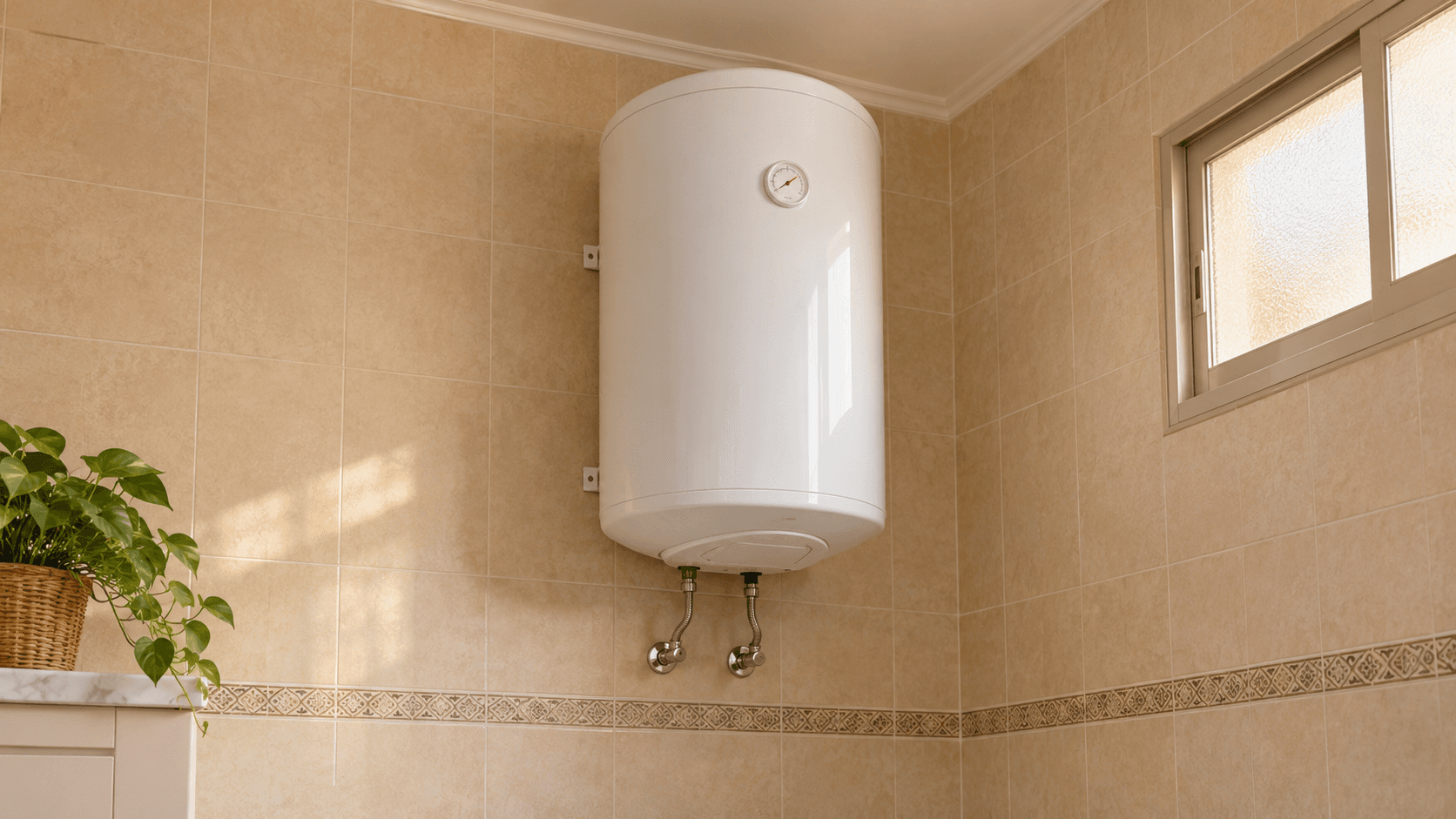
If you’re replacing an electric water heater, the litres printed on the old tank are a useful starting point. Before ordering the same size, check what that heater serves, where it sits, and what the replacement will need. A photo of the model label and a wide view of the installation can help the technician tell you what fits before a box arrives at your door.
Send the old model number and a wide photo, then have the installer confirm the new tank’s fit, connections and scope before buying.
Start with what the old heater serves
Write down which taps or showers use the heater. If it serves one bathroom, tell the technician whether people usually shower one after another or at different times. If more than one fixture shares it, mention when they tend to be used together. Saudi Standards’ water heater guidance recommends choosing capacity based on the hot water expected at the installation site. The number of people in the home is useful context, but the fixtures and busiest part of the day tell the technician more about this particular tank.
Send the model number and a wide photo
Read the label only if you can see it safely from the floor. Send the brand, model and capacity. Take a wider photo showing where the tank sits, the space around it and any cabinet or access panel. Mention if the existing tank is horizontal, vertical or concealed. The installer should check what orientation the new model permits, whether the wall and fixings are suitable, and whether there’s room to service it later. Ariston’s Saudi guidance for under-sink models illustrates why the design and connections have to suit the intended position.
Check the label on the exact replacement
Ask the seller for the model number in writing and a clear photo of the Saudi energy label for that model. SASO’s Ta’akad guidance includes water heaters among the products whose energy label details can be checked using the app. Compare similar models that actually meet your needs. The model the installer has approved for the space and supply is the one whose label you want to check, even if the shop groups several sizes on one page.
Ask what can be reused and what needs checking
Get the installer to assess the mounting, water connections and electrical supply for the new model. Ask how they’ll check the required safety valve and its discharge arrangement. A straight swap can still need changes, so agree before the visit on how extra work will be quoted. Leave electrical connections and safety fittings to qualified installers. Have the installer isolate and remove the old heater safely. If there is active leakage near electrical parts, stay clear and arrange prompt professional help.
Confirm what the visit covers
Ask who supplies the heater and fittings, whether the old tank is removed and taken away, and who handles any separate electrical work. For example, you could send: “The current tank is in a cupboard above the laundry area. It serves one shower. I’ve attached the model label and a wide photo. Please confirm whether the replacement I’m considering fits and whether removal is included.” Check Tasko’s standard water heater installation listing against that job.
Keep the details from the handover
Ask the technician to confirm that they checked the installation for leaks and tested it. Have them show you the normal controls and explain who to call if something looks wrong. Save the invoice, model, warranty paperwork and manual together. If a visit is still ahead of you, our home-service preparation guide has tips for sharing access details.