
Water near an electrical outlet after rain? What to do first
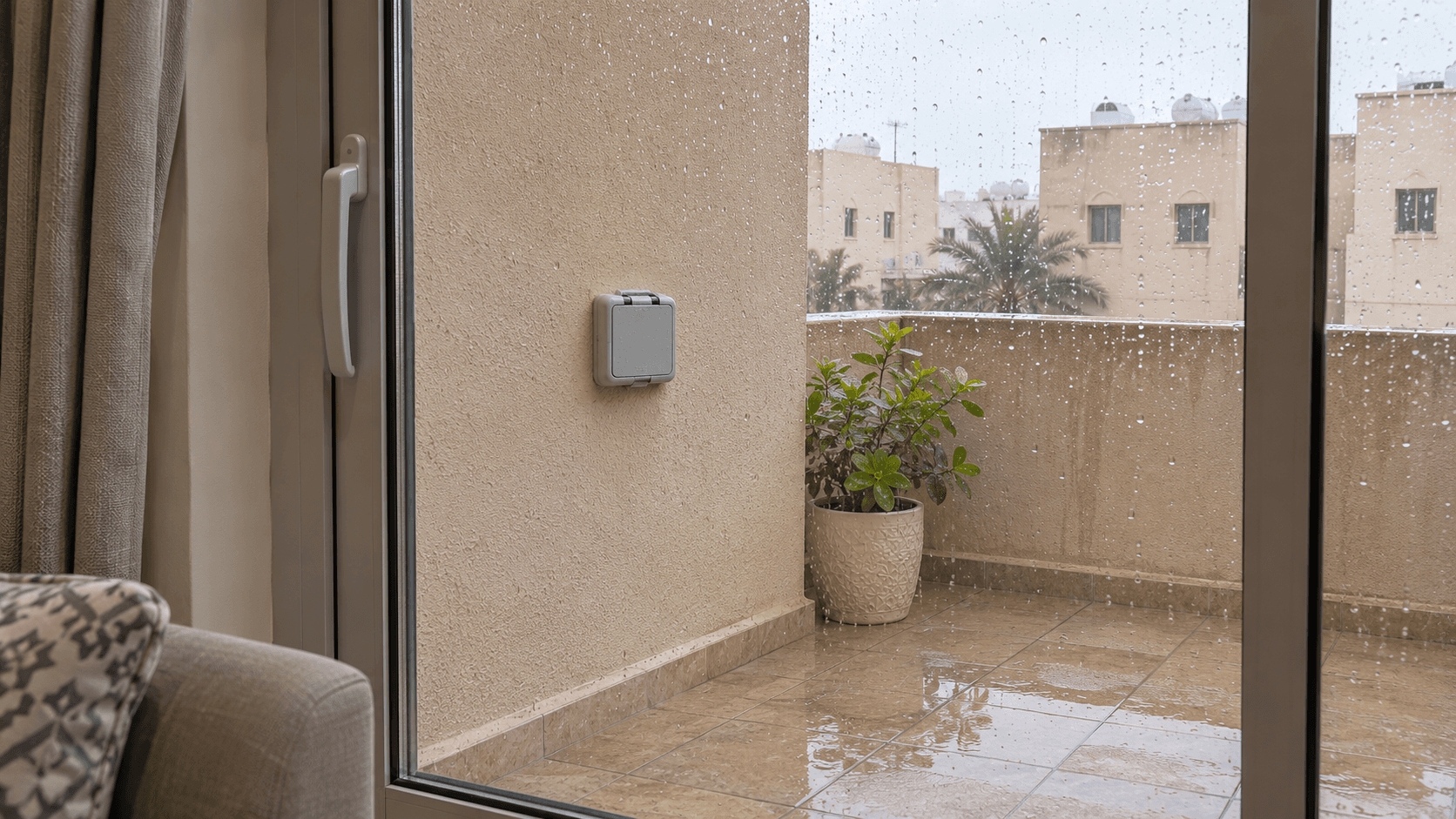
After a downpour, you might spot water running down a wall toward a socket or dripping through a ceiling light. The first thing to do is keep people away from the wet area. You can tell an electrician a lot about what happened from a dry spot, without checking whether the socket still works.
Stay away from wet electrical fittings, leave tripped breakers off, and have a qualified electrician assess the affected area.
Keep away from water near electrical fittings
Keep children and pets out of the affected room or balcony. Leave nearby plugs, switches, light fittings and cords alone. If water is close to a socket, you may not be able to see where else it has reached. Leave the area undisturbed and call a qualified electrician for help isolating the supply if needed. Never cross water to reach a breaker or touch a wet panel. The CDC’s guidance for flooded homes also calls for an electrician to check the system before power is restored.
Know when it’s an emergency
If there’s smoke, sparking or a burning smell from an electrical fitting, move away and contact emergency services from a safe location. Don’t wait for a booked visit. The Saudi Authority for the Care of People with Disabilities’ emergency guide lists 911 for Makkah, Madinah, Riyadh and the Eastern Province, and 998 for other regions.
Leave a tripped breaker off
If a breaker tripped during the rain and you suspect water got near the circuit, leave it off. Even if you can see the outlet from the doorway and its face looks dry now, moisture may still be behind it. Keep treating the area as unsafe until it’s checked. Don’t try a lamp, charger or extension lead to see if things are back to normal. The Texas Department of Insurance’s guidance on water-damaged electrical equipment explains why equipment should be assessed before power returns.
Explain what you noticed from a dry spot
Once everyone is safe, tell the electrician where the water first appeared, which fitting is nearby and when you noticed the problem. Mention any power loss you already observed, such as a light going out while the rest of the flat stayed on. Say whether water is still coming in. A photo from a dry, safe location can help if you already have a clear view. If you’d need to step closer, a written description is enough.
For example: “Rain came in by the living room balcony door around 5 p.m. Water ran along the skirting below the wall socket. The living room lights went out around the same time. We stayed out of the area.” That gives the electrician a location and a sequence without guessing what caused the trip.
Tell building maintenance about the water too
If you rent or live in a shared building, tell the owner or building manager which wall, ceiling or door was affected. Ask who will investigate where the water got in. The electrician can assess the circuit, while building maintenance can look for the entry point. If you later find water under the sink on a dry day, our guide to describing a plumbing leak covers a different set of clues.
Ask what can be used again after the check
Once the immediate hazard is under control, ask the electrician which outlets and lights are safe to use and whether any fittings need replacement or follow-up. If you’re arranging a routine assessment, check Tasko’s electrical inspection listing and describe the water exposure when you book.